When Should You Replace vs Repair Your HVAC System?
What Pennsylvania Homeowners and Business Owners Should Consider Before Making a Costly Decision
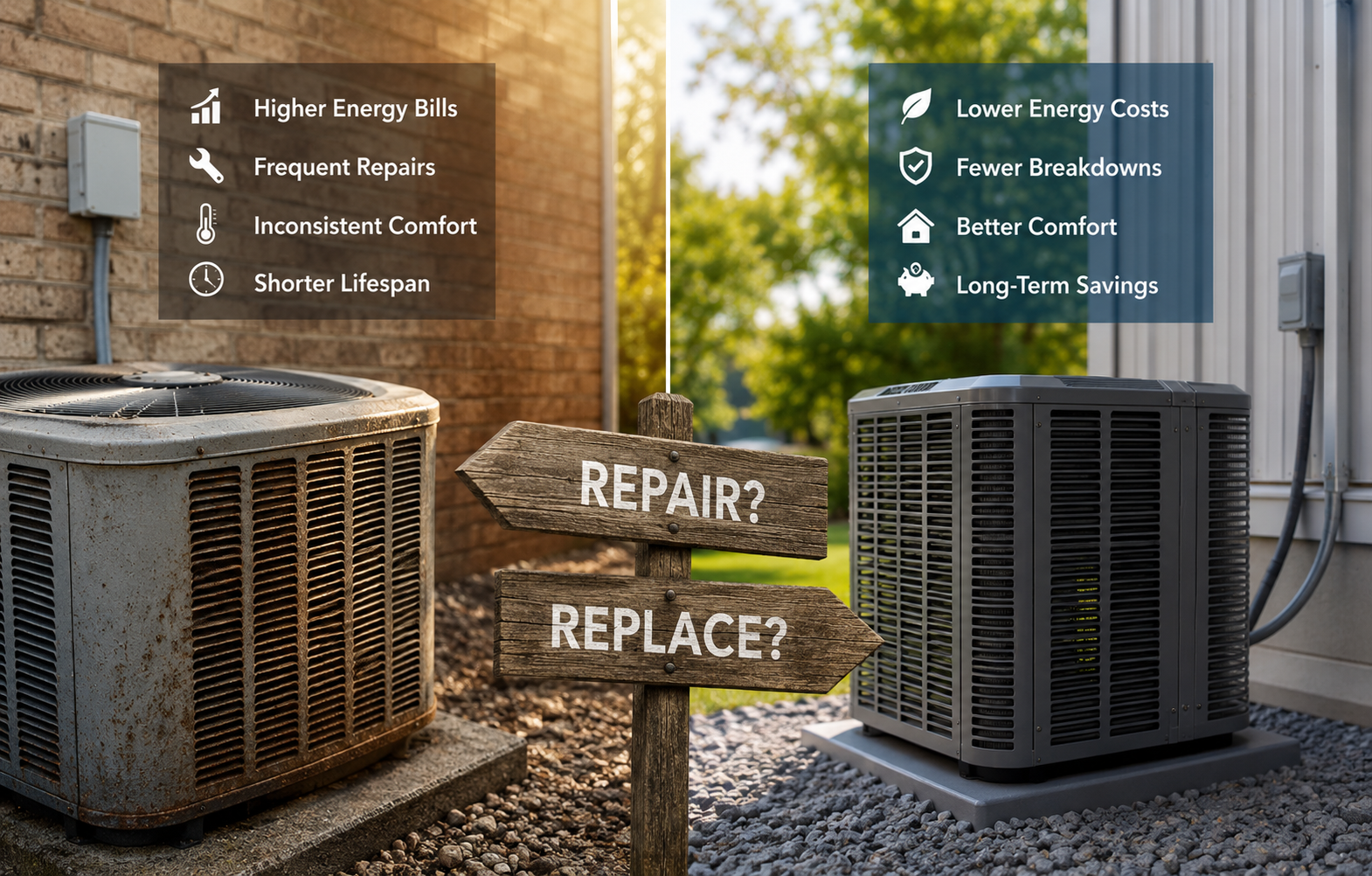
For many property owners, one of the most frustrating situations is dealing with an HVAC system that suddenly stops working properly — especially during the peak of summer or winter.
Whether it’s a residential air conditioning unit struggling to keep up with rising temperatures or a commercial heating system failing during cold Pennsylvania weather, the first question most people ask is simple:
“Should I repair it, or is it finally time to replace it?”
According to technicians at County Electrical & Mechanical, there is no one-size-fits-all answer. The right decision often depends on the age of the system, repair history, energy efficiency, and long-term operating costs.
For homeowners and businesses throughout Pottsville, Schuylkill County, Carbon County, Luzerne County, Northumberland County, Berks County, and Lebanon County, understanding the warning signs can help avoid wasting money on temporary fixes that may no longer make financial sense.
Age Is Often One of the Biggest Factors
Most HVAC systems are not designed to last forever.
While some systems may continue operating for 15 to 20 years with proper maintenance, efficiency and reliability typically decline as equipment ages.
Older systems often begin experiencing more frequent breakdowns, reduced airflow, inconsistent temperatures, higher energy consumption, and difficulty keeping up during extreme weather conditions.
Many older units also use outdated refrigerants or components that may become harder and more expensive to replace over time.
If a system is approaching or exceeding its expected lifespan, replacement may become the more practical long-term investment.
Frequent Repairs Can Add Up Quickly
One repair may not seem like a major concern at first. However, repeated service calls over the course of several months or years can become expensive very quickly.
HVAC professionals often advise property owners to look at the bigger financial picture instead of focusing only on the immediate repair cost.
If a system constantly requires electrical troubleshooting, refrigerant repairs, motor replacements, thermostat work, or compressor servicing, the accumulated repair expenses may eventually outweigh the value of continuing to keep the system running.
Business owners in particular may also face additional financial losses from downtime, employee discomfort, or operational interruptions caused by unreliable HVAC performance.
Rising Utility Bills May Signal Efficiency Problems
One of the most overlooked signs of HVAC decline is increasing energy costs.
As systems age, they typically become less efficient and require more energy to produce the same level of heating or cooling.
Many property owners first notice problems when monthly utility bills begin climbing without significant changes in usage habits.
Older systems may struggle because of worn internal components, restricted airflow, refrigerant inefficiencies, dirty coils, aging compressors, or outdated technology.
Modern high-efficiency systems are often capable of significantly reducing monthly operating costs, especially in commercial buildings or larger residential properties.
Uneven Temperatures and Comfort Problems Matter Too
Even if an HVAC system technically still operates, poor indoor comfort may indicate the equipment is no longer performing efficiently.
Homeowners often notice certain rooms staying warmer or colder than others, weak airflow from vents, excess humidity indoors, or constant thermostat adjustments.
Commercial buildings may experience employee complaints, customer discomfort, or inconsistent temperatures throughout larger facilities.
These comfort issues can sometimes be repaired, but in older systems they may also signal larger performance limitations that replacement could resolve more effectively.
Major Component Failures Usually Require Careful Evaluation
Certain HVAC repairs are far more serious — and expensive — than others.
Compressor failures, heat exchanger damage, and significant refrigerant leaks can sometimes approach the cost of replacing the system entirely.
In these situations, HVAC professionals often recommend comparing the repair cost against the remaining lifespan of the system, expected future repairs, energy efficiency improvements, warranty coverage, and long-term operating expenses.
For many property owners, investing in a new system may provide greater reliability and lower maintenance costs over time.
Businesses Often Have Different Considerations Than Homeowners
Commercial HVAC decisions are often more complex because businesses rely heavily on stable indoor climate control to maintain operations.
A failing HVAC system can affect employee productivity, customer experience, equipment performance, product storage conditions, and overall operational efficiency.
For restaurants, healthcare facilities, offices, warehouses, and manufacturing environments, even short HVAC interruptions can become costly.
Because of this, many commercial property owners choose replacement earlier to reduce the risk of unexpected downtime during critical operating periods.
Preventative Maintenance Can Delay Replacement
HVAC professionals consistently emphasize that regular maintenance remains one of the best ways to extend system lifespan.
Routine inspections, filter replacements, coil cleaning, and seasonal servicing help systems operate more efficiently while reducing wear and tear on major components.
Preventative maintenance may also allow technicians to identify problems early before they become larger repair issues.
In many cases, properly maintained systems continue operating reliably for years longer than neglected equipment.
Every Property Is Different
Ultimately, the decision to repair or replace an HVAC system depends on the unique condition of the equipment and the goals of the property owner.
Some systems may only require minor repairs to continue operating effectively, while others may become increasingly expensive and unreliable over time.
County Electrical & Mechanical provides residential and commercial HVAC inspections, repairs, maintenance, and replacement services throughout Pottsville and surrounding Pennsylvania counties.
For property owners unsure about the best path forward, HVAC professionals recommend scheduling a professional system evaluation to better understand both the short-term repair needs and the long-term financial considerations before making a major decision.